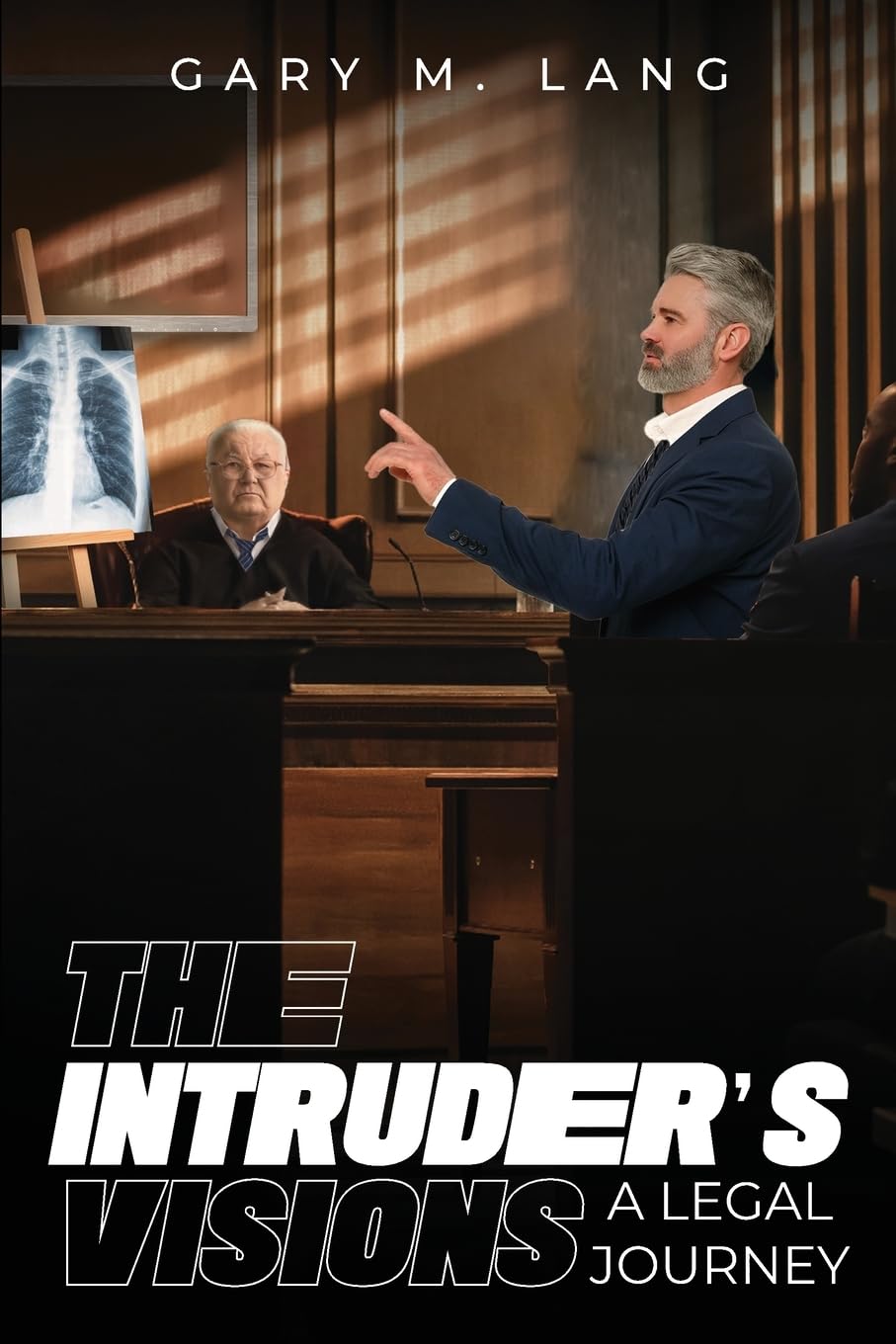
In “The Intruder’s Vision: A Legal Journey,” Gary M. Lang crafts an atmospheric and gripping narrative that melds the stark realities of homelessness with the intricate and often murky world of legal battles. From the very first chapters, Lang immerses readers in a compelling duality: the cold, gritty life of a nameless intruder and the meticulous legal world of attorney Samuel Wright III.
Through this unique juxtaposition, Lang explores themes of survival, systemic failure, and the often invisible lines that connect society’s fringes to its professional heart.
A Visitor in the Shadows
The book opens with a lone visitor navigating the streets of a cold, snowy evening, finding himself drawn to an abandoned seven-story red brick building. He’s not your typical intruder; his presence is almost spectral, blending into the forgotten corners of the city. Dressed in a worn-out coat, jeans, and boots, the man carries with him the weight of past decisions and unspoken stories. Lang vividly describes his journey into the building, capturing the claustrophobic descent of the elevator into the darkened basement as if mirroring the intruder’s own descent into a forgotten existence.
Lang paints the abandoned building as more than just a setting; it becomes a character in its own right. The dimly lit spaces, cluttered with forgotten legal documents, holiday decorations, and old baseball gear, reflect the chaos and disarray of lives left behind.
The Legal World of Samuel Wright III
Meanwhile, just a few floors above, Samuel Wright III, a seasoned attorney, is deep into his work, surrounded by autopsy photos and legal briefs. Lang introduces Wright in stark contrast to the intruder; he is a man consumed by his cases and haunted by the stories of those he represents. As he sits behind his desk, pondering over the latest tragic case of a young woman lost to the drug epidemic, the book shifts into a narrative that examines the complex moral and ethical dilemmas faced by legal professionals.
Themes of Isolation, Survival, and the Search for Meaning
At its core, “The Intruder’s Vision: A Legal Journey” is a story of isolation and survival. Lang deftly weaves together the lives of two men from vastly different worlds, illustrating how each grapples with the weight of their past and the uncertainty of their futures. The intruder, though nameless, is a powerful representation of the invisible struggles of homelessness—a life marked by constant movement, the search for shelter, and fleeting moments of connection to a past life that still lingers in small, poignant reminders.
In contrast, Samuel Wright III’s world is one of visible, structured isolation. His legal career, while outwardly successful, confines him to a realm of grief, tragedy, and the relentless pursuit of justice.
Connecting the Disparate Worlds
What makes “The Intruder’s Vision” truly compelling is how it blurs the lines between these two seemingly separate worlds. The narrative suggests that, despite their differences, the intruder and Wright are connected by shared themes of resilience, loss, and the human desire for meaning. The intruder’s discovery of old office relics in the basement serves as a metaphor for how easily people and their lives can be reduced to forgotten items in storage—lost but not entirely erased. Lang’s writing captures the beauty and tragedy of these parallel lives, inviting readers to see the humanity in each character’s journey.
A Legal Journey Through Human Struggle “Gary M. Lang’s “The Intruder’s Vision: A Legal Journey” is more than just a tale of crime or law—it’s a meditation on the complexities of human existence. It delves into the underbelly of urban life, where every character, whether a homeless intruder or a seasoned attorney, is striving to carve out a sense of purpose amid the chaos. With rich, descriptive prose and an unflinching eye for detail, Lang creates a narrative that is at once haunting, thought-provoking, and deeply resonant.