Laws and policies may shape the justice system, but people give it its character. Every decision made inside a jail, courtroom, or newsroom carries weight. The system can harm or help not because of what is written on paper, but because of how individuals choose to act when faced with real human lives.
Institutions Do Not Act Alone
It is easy to speak about the justice system as if it were a single force. In reality, it is a collection of daily choices made by guards, lawyers, counselors, and journalists. Each role carries power, even when it may seem insignificant.
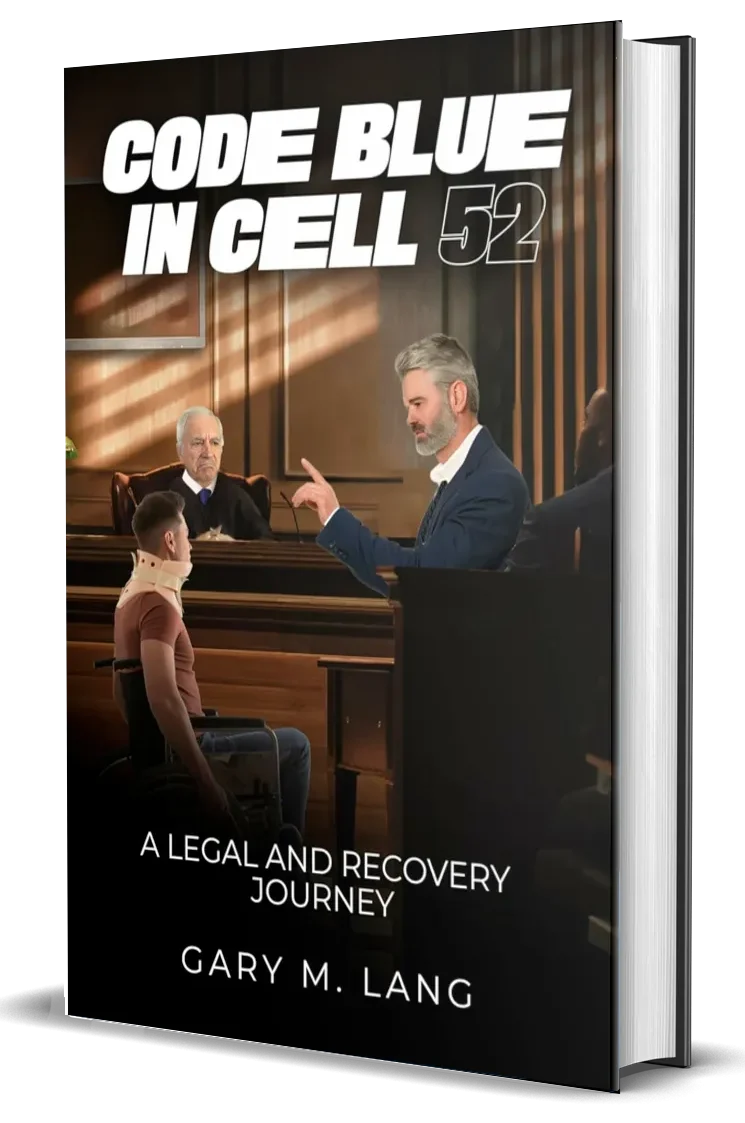
In Code Blue in Cell 52: A Legal and Recovery Journey by Gary M. Lang, this truth is central. A young man’s suicide attempt in a county jail reveals how outcomes are shaped not only by rules, but by the people tasked with enforcing them. Procedures exist; however, how closely they are followed and how seriously warning signs are taken depend on human judgment.
The Role of Guards and Frontline Staff
Correctional officers are often the first and last point of contact for incarcerated people. Their work is demanding and stressful, but their choices matter deeply. A guard who pays attention, listens, or takes concerns seriously can prevent harm. One who becomes numb or dismissive can allow tragedy to unfold.
The book illustrates how small moments within a jail can have enormous consequences. A missed check, an ignored concern, or a decision not to speak up can change a life forever. These are not abstract failures. They are human ones.
Lawyers as Gatekeepers of Accountability
Lawyers occupy a unique position within the system. They can accept official explanations or challenge them. They can prioritize convenience or insist on truth.
Sam, the attorney in Code Blue in Cell 52, understands that the law often sets a high bar for accountability. Still, he chooses to look beyond surface answers. His role illustrates how legal professionals shape whether the system remains closed or becomes open to scrutiny. Justice depends not only on statutes, but on whether someone is willing to push against resistance.
Counselors and the Power of Empathy
Counselors and recovery workers often see people at their most vulnerable. Their presence can offer stability in environments defined by control and punishment.
Franklin’s work shows how compassion can exist even within rigid systems. His background in recovery allows him to see individuals rather than offenses. This perspective does not erase responsibility, but it restores humanity. When counselors act with care, the system becomes less damaging. When empathy is absent, harm multiplies quietly.
Journalists and the Choice to Ask Questions
Journalists influence what the public sees and what remains hidden. Choosing to investigate rather than repeat official statements can expose uncomfortable truths.
Nicole’s role highlights how journalism can either protect systems or challenge them. By asking questions others avoid, she helps shift attention back to the people affected by institutional failure. Without this choice, silence would prevail.
This book makes one truth clear. The justice system is not inherently humane. It becomes humane only when people inside it choose to act with responsibility, care, and courage.
For readers interested in how individual choices shape justice and accountability, Code Blue in Cell 52: A Legal and Recovery Journey by Gary M. Lang is a thoughtful and relevant book to read.
Read Code Blue in Cell 52 by Gary M. Lang, available on Amazon: https://www.amazon.com/dp/B0FPZY7YZQ.